Cart is empty
Shop News
-
25/11/2025Ganoderma Benefits
-
07/02/2025Colds & Flu - treatment and prevention
-
24/01/2025Ginseng - Nature's anti-inflammatory
-
23/01/2025Curcumin Benefits
-
02/05/2024Allergies Tradicional Chinese Medicine
-
12/03/2024Food Combining and Chinese Medicine
-
23/08/2023Phytoestrogens
-
05/06/2023Ginseng Benefits
-
02/06/2023Aumento de precios de la marca Blue Poppy
-
20/07/2022Infertility and Chinese Medicine
-
10/05/2022Allergic Rhinitis
-
24/03/2022TCM Obesity and Its Causes
-
23/03/2022Cancer Prevention and Diet
-
26/01/2022Medicinal Mushrooms
-
18/12/2021Christmas Remedies
-
09/07/2021CANDIDIASIS
-
03/03/2021Chinese Herbal Medicine formula studied to improve cancer therapy
-
12/01/2021The benefits of Xiao Yao San
-
15/09/2020Coronavirus Protocol (summary)
-
01/06/2020TCM Principles for Weight Loss
-
12/02/2020Take Good Care of Your Qi
-
01/01/2020Cordyceps Sinensis Benefits
-
01/12/2019Prevention & Treatment of Colds & Flu
-
27/04/2019ANXIETY - causes and treatments
-
26/03/2019Prostatitis and Chinese Herbs
-
01/03/2019What is an Adaptogenic Herb?
-
05/02/2019New Jade Herbal Formulas
-
09/12/2018The Shen of the Heart
-
23/08/2018Hyperthyroidism and Hypothyroidism
-
05/07/2018FOCUS ON A REMEDY: WARM THE MENSES
-
04/04/2018Treating Insomnia With Chinese Herbal Medicine
-
25/03/2018Cordyceps Sinensis research
-
01/03/2018Chinese Herbal Medicine for Panic Attacks
-
07/11/2017BI SYNDROME
-
01/09/2017Chemotherapy and Anti-Oxidants
-
05/03/2017Lumbar Disc Herniation
-
31/01/2017Treatment Principles in Exterior Invasions
-
21/10/2016Healthy Aging and Oriental Medicine: Qi is the secret
-
23/09/2016Horny Goat's Weed Benefits
-
25/06/2016Ginkgo Biloba Benefits
-
23/03/2016Blood Stasis
-
23/01/2016CHRONIC FATIGUE SYNDROME
-
28/12/2015TONICS
-
24/10/2015A CASE HISTORY OF CHRONIC BRONCHITIS
-
23/09/2015Ganoderma Lucidum reduces obesity in mice
-
01/07/2015The Five Elements and Diet in Chinese Medicine
-
23/05/2015Daoist Sexual Practices
-
21/02/2015DEPRESSION
-
22/01/2015GLAUCOMA
-
20/12/2014ENDOMETRIOSIS
-
28/11/2014POLYCYSTIC OVARY SYNDROME
-
21/08/2014Ear infections and antibiotics
-
24/06/2014FOCUS ON A REMEDY: CHEMO-SUPPORT
-
21/03/2014Stomach-Yin Deficiency and Jade Spring
-
21/02/2014JOY, AN EMOTIONAL CAUSE OF DISEASE?
-
17/01/2014SEXUAL LIFE IN CHINESE MEDICINE
-
19/12/2013ON STAGNATION OF LUNG- AND HEART-QI
-
14/11/2013THREE TREASURES REMEDIES FOR PAIN
-
23/10/2013HEADACHE CASE HISTORY
-
12/07/2013Giovanni Maciocia Clinical Tip: Arouse Power
-
19/04/2013Case history - Chronic constipation
-
18/06/2012Herbs for the treatment of Anorexia
-
09/04/2012REMEDY OF THE MONTH: CLEAR YANG
-
28/04/2011Lingzhi slows progress of Alzheimer’s
-
18/10/2010European Legislation for natural products
-
19/09/2010700-year-old Chinese medicine can treat depression...
-
01/09/2009Swine Flue
GLAUCOMA
22/01/2015
Understanding Glaucoma
With an Emphasis on Primary Open-Angle Glaucoma
Introduction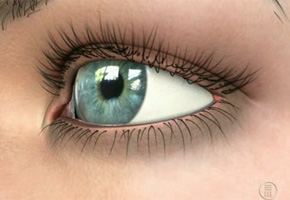
Glaucoma is one of the leading causes of irreversible blindness, with nearly 70 million people suffering from this chronic ophthalmologic condition worldwide. Ninety percent of all cases are primary open-angle glaucoma (POAG). POAG is often called ‘the silent thief of sight’, as in the early disease phase, typically no symptoms are experienced. Patients may experience progressive worsening of their vision, initially peripherally (i.e., vision outside the center of gaze), but eventually involving the central vision. (Vandenbroeck et al 2011)
Primary open angle glaucoma is described distinctly as a multifactorial optic neuropathy that is chronic and progressive with a characteristic acquired loss of optic nerve fibers. Such loss develops in the presence of open anterior chamber angles, characteristic visual field abnormalities, and intraocular pressure (IOP) that is too high for the healthy eye. (Kokotas et al 2012)
Glaucoma is considered as a progressive optic neuropathy often caused by elevated intraocular pressure consequent to abnormally high resistance to aqueous humor (AH) drainage via the trabecular meshwork (TM) and Schlemm’s canal. Morphological and biochemical analyses of the TM of patients with POAG revealed the loss of cells, increased accumulation of extracellular matrix proteins (ECM), changes in the cytoskeleton, cellular senescence, and the process of subclinical inflammation. The TM is the target tissue of glaucoma in the anterior chamber, and the development and progression of glaucoma are accompanied by the accumulation of oxidative damage in this tissue. (Babizhayev MA 2012)
Glaucoma is an optic neuropathy, specifically a neurodegenerative disease characterized by loss of retinal ganglion cells (RGCs) and their axons. In the past, glaucoma was viewed as a disease of raised intraocular pressure (IOP); however, it has become increasingly clear that elevated IOP is only one of the risk factors for this disease. Recent evidence indicates that lowering IOP does not prevent progression in all patients and that progression can continue despite effective lowering of IOP. (Vasudevan et all 2011)
Glaucoma filtering surgery may be compromised by cystic blebs which develop more frequently when anti-metabolites are used to arrest wound healing. Matrix metalloproteinases (MMPs) and the naturally occurring tissue inhibitors of metalloproteinases (TIMPs) are essential in connective tissue remodeling and wound healing. Increased MMPs and TIMPs expression is associated with the formation of filtering blebs, suggesting involvement of MMPs in bleb remodeling. MMP-2 and ProMMP-2 levels in tear fluid may be markers for bleb configuration. (Mathalone et al 2011)
The trabecular meshwork (TM) accounts for about 70–90% of total aqueous humor (AH) outflow from the anterior chamber in the adult human eye. Moreover, the TM constitutes an outflow resistance and thereby determines the intraocular pressure (IOP). Increase of outflow resistance and IOP, eventually, is a major risk factor in primary open angle glaucoma (POAG). POAG patients exhibit specific morphological peculiarities as accumulations of extracellular matrix material (ECM) and condensation or clustering of the cytoskeleton. Frequently, signs of subclinical inflammation are reported. Moreover, deregulations on the cellular level affecting signaling pathways regulating apoptosis, cellular senescence and cell cycle control were observed in ocular cells of POAG patients. (Tourtas et al 2012)
Current glaucoma therapy relies on drugs that lower intraocular pressure (IOP), and several glaucoma medications are effective at lowering IOP when administered properly. However, poor adherence is a fundamental problem that increases with the age of the patient, and approximately 20% of patients eventually require surgery to lower IOP. An alternative treatment approach may lie in the use of neuroprotective agents, designed to promote RGC survival independent of IOP. The most common way to reduce IOP is topical administration of eye drops one or more times daily. (Lavik et al 2011)
There are several classes of effective topical glaucoma medications that lower the IOP. They include prostaglandin analogs (eg, latanoprost), beta-blockers (eg, timolol), alpha-adrenergics (eg, brimonidine), carbonic anhydrase inhibitors (eg, dorzolamide), and cholinergics (eg, pilocarpine). (Lavik et al 2011)
Certain yoga exercises in inverted position (like Sirsasana) leads to two- to three-fold IOP rise from baseline for short duration. We documented a three-fold increase in IOP during the inverted position (IOP checked with Tonopen?) in at least three of our progressive POAG patients with good 24-hour IOP control (personal communication with Dr. Rajul S Parikh). Though evidence is not sufficient to prove the role of inverted yoga exercises as a causal risk factor for glaucoma progression, it is imperative to inform glaucoma patients about IOP elevations associated with inverted posture. (Parikh R & Parikh S)
Blood Tests in Glaucoma
Glucose & insulin – Glaucoma has been positively linked to diabetes mellitus. Glaucoma is more often present in the elderly. Important prognostic factors of glaucoma may be oxidative stress resulting from the toxic effects of glucose, and diabetes-associated vascular complications. Our observations suggest that the generation of reactive oxygen species may promote localized DNA damage in glaucoma-iris tissues of elderly patients vulnerable to diabetic injury. (Szaflik et al 2010)
Homocysteine (Hcy) and hydroxyproline (Hyp) – Increased levels of aqueous humor Hcy and Hyp may be associated with primary open angle glaucoma (POAG). In addition, Hcy and Hyp may be useful protein levels in aqueous humor of POAG patients as a consequence of glaucomatous damage. (Ghanem et al 2012)
hs-C-reactive Protein (CRP) – Measurement of hs-CRP, an inflammatory biomarker, independently predicts future vascular events and improves global classification of risk of cardiovascular diseases. (Shen et al 2012)
Lipid Panel – Serum lipid values could be one of predictable factors in primary open-angle glaucoma diagnosis. Due to the patient age, cholesterol values, as common factors in primary open-angle glaucoma and atherosclerosis genesis, could be concern in the same aetiology based on dyslipidaemia as well. (Pavljasevic & Asceric 2009)
Lipid Panel – The lipid profile exhibited a mild elevation in the patients with POAG. (Su et al 2007)
IL-6 - In glaucoma, the optic nerve head (ONH) is the principal site of initial axonal injury, and elevated intraocular pressure (IOP) is the predominant risk factor. Cell proliferation and IL-6-type cytokine gene expression, rather than astrocyte hypertrophy, characterize early pressure-induced ONH injury. (Johnson et al 2011).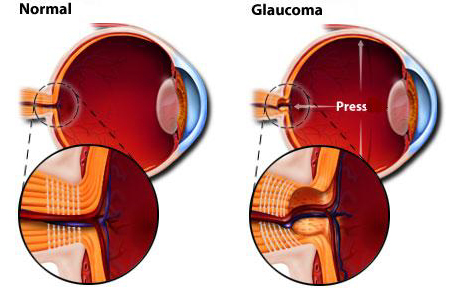 TCM formulas for Glaucoma:
Qi Ju Di Huang Wan
Long Dan Xie Gan Tang
Ming Mu Di Huang Wan
Natural Compounds Helpful in Glaucoma
Anti-oxidants – One factor in the focus of investigative glaucoma research is oxidative stress, as one of the main problems in glaucoma is an imbalance of reactive oxygen species (ROS) formation and decomposition resulting in ROS accumulation, as well as general reduction of anti-oxidant capacities. trabecular meshwork cells were shown to be especially sensitive to oxidative stress, and typical responses affect ECM synthesis, and basic cellular processes, like cell cycle control, proliferation, apoptosis and cellular metabolism. In this respect, prophylactic intake of dietary supplements with alleged antioxidant capacities is recommended for protection from deleterious effects of oxidative stress and prevention of glaucoma thereby. (Tourtas et al 2012).
Ginkgo Biloba extract administration appears to improve preexisting visual field damage in some patients with normal tension glaucoma. (Quaranta et al 2003)
Hyaluronic acid (HA) – is one of the major components of the ECM and may attribute to the filtration function of the trabecular meshwork. The depletion of HA may increase aqueous outflow resistance in the trabecular meshwork of primary open angle glaucoma (POAG) patients. In POAG trabecular meshwork cells, the level of HA concentration increases the activities of MMP-2 and MMP-9. The lack of HA in aqueous humor can result in a reduction in activities of MMPs and therefore may be involved in the pathogenesis of POAG. (Guo & Liang 2012)
Omega-3 Fatty Acids - The stimulation of IL-6, a key pro-inflammatory interleukin and circumscribed oxidative stress marker, was repressed by ?-3 and ?-6, for the former even to a significant extent. Based on the observed side effects of omega-6, omega-3 appears to be the more beneficial fatty acid in respect of prophylactic intake for prevention of a glaucomatous disease. (Tourtas et al 2012)
Vitamin E - The importance of oxidative stress in both the formation and the course of glaucoma has been known. Neuroprotective effects of vitamin E compounds in retinal diseases and glaucoma have been clincally demonstrated. (Engin et al 2010)
ENDOMETRIOSIS
20/12/2014
WESTERN MEDICAL PERSPECTIVE
Definition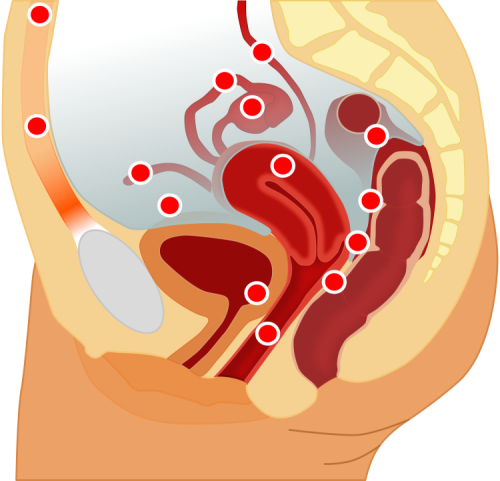
Endometriosis is a condition resulting from the presence of actively growing and functioning endometrial tissue in locations outside the uterus. The areas where endometriosis may occur are widespread and usually multiple. They include:
• the ovaries
• sigmoid colon
• uterine wall
• rectum
• Fallopian tubes
• ureters
• abdominal scars
• bladder
• umbilicus
• vagina
Occurrence
The incidence of endometriosis is currently on the increase. The following groups may be affected by it:
• women between the ages of 25-40 who have not had children
• teenagers (previously not thought to be commonly affected)
• women who have undergone elective tubal sterilization
• familial incidence (7% relative risk of developing it if a first-degree female relative has it)
• there seems to be a correlation between endometriosis and the use of tampons, intercourse during menstruation and the use of the intrauterine contraceptive device (the coil)
Aetiology
Although many theories exist, the pathogenesis of endometriosis is still not fully understood in the Western medical world. The following are some of the most common theories:
• retrograde menstruation and tubal reflux: proposed by Samson who believed that menstrual blood was forced out along the fallopian tubes into the peritoneal cavity. He suggested that menstrual blood contains fragments of endometrium which may implant on pelvic structures and grow. Excessive uterine contractions characteristic of primary dysmenorrhoea (often present in women with endometriosis) may contribute to a bidirectional menstrual flow from the uterus.
• celomic metaplasia: proposed by Meyer and Ivanoff who suggested that all tissues in which endometriosis arises are embryologically derived from celomic epithelium, i.e. peritoneal cells change into endometrial tissue. Chronic irritation of the peritoneum by menstrual blood may cause celomic metaplasia, which can subsequently result in endometriosis.
• direct implantation: according to this theory, endometrial tissues are displaced into an implant in the new sites. This explains why endometriosis may be found in surgical scars.
• genetic and immunologic factors: there is a 5.8 percent familial incidence among immediate female siblings, an 8.1 percent risk if the mother had endometriosis and a 7 percent risk if a female sibling has endometriosis. These figures suggest a polygenic and multifactorial inheritance for endometriosis.
• lymphatic dissemination: Halban suggested that normal endometrium might "metastasize" via lymphatic channels and thus spread to extrauterine sites where implantation and growth would produce the characteristic lesions of endometriosis.
• vascular theory: this theory was proposed by Navratil who suggested that normal endometrium was deported via the veins to remote areas of the body.
Pathology
There are three diagnostic histologic features of endometriosis. They are:
• endometrial glands
• endometrial stroma
• evidence of haemorrhage
The typical lesion will show an abundance of inflammatory cells and fibrous connective tissue.
Ovarian endometriosis occurs in the form of small superficial deposits on the surface of the ovary or as larger cysts which may be up to 10cm in size (known as endometriomas or "chocolate cysts" and which may rupture. In the ovary, the process is almost always bilateral. There is usually considerable fibrosis and puckering of the ovarian surface in the region of the cyst as well as adherence to neighbouring structures.
In the other most frequently involved areas, i.e., throughout the pelvic peritoneum, the lesions are normally smaller and more numerous and are surrounded by dense, fibrous scar tissue.
Clinical manifestations
The most commonly seen symptoms and signs of endometriosis are as follows:
I. dysmenorrhoea (severe pain beginning before menstruation and continuing almost to the end)
II. pelvic pain
III. lower backache radiating to the anterior thigh
IV. heavy periods
V. irregular bleeding
VI. infertility (since inflammation, scar tissue and adhesions in the pelvis may obstruct the passage of an egg along the fallopian tube)
VII. dyspareunia
VIII. pain sometimes accompanied by nausea and vomiting or diarrhoea
IX. pain on defecation
X. rectal pressure
XI. tender and enlarged ovaries
XII. pelvic nodularities and thickenings
It is important to note, however, that 30-35% of patients with endometriosis do not suffer any pain or discomfort, though they may suffer from other manifestations such as infertility or pelvic masses. Also, there is no direct correlation between the severity of the pain and the extent of endometriosis: thus, a woman with advanced endometriosis may suffer less pain than a woman with the beginning stages of the disease.
Diagnosis
Diagnosis of endometriosis is made principally by taking a clinical history. If it is suspected, confirmation is usually obtained by laparoscopy which shows endometriotic cysts and deposits. Definitive diagnosis can be made by microscopic examination of excised tissue that demonstrates both glands and stroma.
Diagnosis is, however, fraught with difficulties and is affected by subjectivity. Laparoscopy relies entirely on the visual and very subjective assessment of the pelvis by the operator and consequently is prone to misinterpretation and subjectivity. Another difficulty is that the symptoms of endometriosis are very similar to those of other diseases, e.g. pelvic inflammatory disease, ovarian tumours and irritable bowel syndrome making differential diagnosis problematic.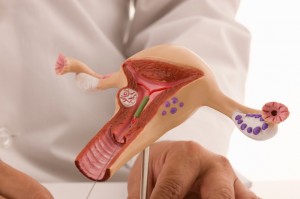 CHINESE MEDICINE PERSPECTIVE
Aetiology
Intercourse during menstruation
When a woman becomes sexually aroused, the Minister Fire goes upwards. If this happens when menstrual blood is flowing downwards, the two will "meet", blocking each other and therefore leading to stagnation of Qi and Blood in the Uterus.
Excessive physical work or exercise
Excessive physical work or exercise can weaken the Spleen, Liver and the Kidneys and adversely affect the Chong and Ren Mai. This is especially the case during puberty when the Chong and Ren Mai are in a state of change and not yet fully developed. Depending on the constitution of the girl, excessive physical work or exercise will either weaken these two vessels or cause stagnation.
Excessive exercise, especially at puberty, during the period or when pregnant, will weaken the Spleen and Kidneys possibly leading to a whole host of problems including a deficiency of Yin, Yang, Qi or Blood and stagnation of Qi and Blood.
External Cold
Women are particularly prone to invasion of Cold just before, during and just after the period, as well as just after childbirth. When Cold invades the Uterus, it contracts causing Blood to stagnate.
Tampons
Tampons block the normal downward flow of menstrual blood thereby leading to stagnation of Blood.
Too early sexual activity
Too early sexual activity (i.e. during puberty) damages the Chong and Ren Mai and renders the Uterus more vulnerable to Blood stasis later in life.
Pathology
The Western disease entity of "endometriosis" broadly corresponds to the Chinese disease-symptom of "Painful Periods": in other words, the pathology, patterns and treatment for Painful Periods is applicable to endometriosis. However, there is an important difference. It is generally agreed by all Chinese gynaecologists that in endometriosis there is always Blood stasis and that endometriosis should be treated as "Abdominal Masses" in Chinese gynaecology. In other words, the endometrial lesions should be considered a form of abdominal masses even though they are not palpable. The important implication of this is that, in the herbal treatment, herbs that "break Blood" and dissolve masses should be chosen.
I. In endometriosis there is always Blood stasis, but in infertility due to endometriosis there are other factors at play and especially Kidney-Yang deficiency causing a luteal insufficiency. In treatment, place the emphasis on Biao, i.e. Blood stasis only if the period is very painful.
II. There is always a Kidney deficiency and disharmony of Liver and Spleen
III. Retention of menses is an important factor, often occurring after childbirth. "Retention of menses" refers to an insufficient discharge of blood during menstruation.
IV. The temperature chart is flat in endometriosis for two reasons, one due to Biao, the other to Ben. The temperature does not decrease enough during the period because of Blood stasis (Biao) and it does not increase enough after ovulation due to Kidney-Yang deficiency (Ben).
V. Yang not growing enough during phase 4 so that Yin pathogenic factors are not expelled (see Winter 2002 Newsletter).
VI. As modern women have a much higher number of menstrual cycle throughout their lifetime, it means they will have all the more "retention of menses". This is due to earlier menarche, later menopause, fewer children, shorter breastfeeding.
Treatment Principle
The main patterns appearing in endometriosis and the relevant remedies are as follows:
I. Liver-Blood stasis (Stir Field of Elixir Harmonizing the Moon, Invigorate Blood & Stem the Flow)
II. Stagnation of Cold in the Uterus (Warm the Menses)
III. Damp-Heat in the Uterus (Drain Redness)
IV. Damp-Phlegm in the Uterus (Clear the Palace)
V. Kidney-Yang deficiency (Unicorn Pearl)
VI. Kidney-Yin deficiency (Growing Jade)
VII. Blood deficiency (Precious Sea)
Combinations Of Patterns
1) KIDNEY-YANG DEFICIENCY WITH BLOOD STASIS AND DAMPNESS
Clinical manifestations
Painful periods, abdominal pain which is relieved by warmth, mid-cycle hypogastric pain, possibly abdominal masses, lower backache, scanty or heavy periods, dark blood with clots, vaginal discharge, feeling cold.
Tongue: Swollen, Pale with Purple sides.
Pulse: Deep-Weak-Slippery-Wiry.
Treatment Principle
1. Menstrual phase: invigorate Blood, eliminate stasis. Harmonizing the Moon.
2. Post-menstrual phase (about 7 days): Warm and tonify Kidney-Yang, tonify Spleen-Qi. Unicorn Pearl.
3. Mid-cycle phase (about 7 days): Warm and tonify Kidney-Yang, tonify Spleen-Qi, resolve Dampness. Clear the Palace or Drain Redness if there is Damp-Heat.
4. Pre-menstrual phase (about 7 days): Invigorate Blood, eliminate stasis, resolve Dampness. Harmonizing the Moon.
2) KIDNEY-YANG DEFICIENCY WITH COLD IN THE UTERUS AND DAMPNESS
Clinical manifestations
Severe abdominal period pain, pain central, pain relieved by the application of heat, menstrual blood scanty with small, dark clots, feeling cold, white vaginal discharge, lower backache, feeling of fullness and heaviness.
Tongue: Pale-Bluish or Bluish-Purple with sticky-white coating.
Pulse: Deep-Weak-Tight.
Treatment principles
1. Menstrual phase (about 5 days): invigorate Blood, eliminate stasis, scatter Cold, warm Yang. Harmonizing the Moon.
2. Post-menstrual phase (about 7 days): tonify and warm Kidney-Yang, tonify Spleen-Qi. Unicorn Pearl.
3. Mid-cycle phase (about 7 days): tonify and warm Kidney-Yang, tonify Spleen-Qi, resolve Dampness. Clear the Palace or Drain Redness if there is Damp-Heat.
4. Pre-menstrual phase (about 7 days): invigorate Blood, eliminate stasis, scatter Cold, resolve Dampness. Harmonizing the Moon.
3) KIDNEY-YIN DEFICIENCY WITH BLOOD STASIS AND DAMPNESS
Clinical manifestations
Painful periods, stabbing or heavy abdominal pain, mid-cycle hypogastric pain, possibly abdominal masses, sore back, scanty or heavy periods, vaginal discharge, dizziness, tinnitus.
Tongue: without coating.
Pulse: Floating-Empty and Slippery-Wiry.
Treatment Principle
1. Menstrual phase (about 5 days): Invigorate Blood, eliminate stasis. Harmonizing the Moon.
2. Post-menstrual phase (about 7 days): nourish Kidney-Yin, tonify Spleen-Qi. Growing Jade
3. Mid-cycle phase (about 7 days): Nourish Kidney-Yin, tonify Spleen-Qi, resolve Dampness. Clear the Palace or Drain Redness if there is Damp-Heat.
4. Pre-menstrual phase (about 7 days): invigorate Blood, eliminate stasis, resolve Dampness. Harmonizing the Moon.
4) BLOOD STASIS WITH KIDNEY-YANG DEFICIENCY WITH DAMP-PHLEGM IN THE UTERUS
Clinical manifestations
Painful periods, abdominal pain which is relieved by warmth, mid-cycle hypogastric pain, soft and moveable abdominal masses, tingling limbs, dizziness, lower backache, scanty or heavy periods, dark blood with clots, excessive vaginal discharge, feeling cold.
Tongue: Swollen, Pale with Purple sides.
Pulse: Deep-Weak-Slippery-Wiry.
Treatment Principle
1. Menstrual phase: invigorate Blood, eliminate stasis. Harmonizing the Moon.
2. Post-menstrual phase (about 7 days): warm and tonify Kidney-Yang, tonify Spleen-Qi. Unicorn Pearl.
3. Mid-cycle phase (about 7 days): Warm and tonify Kidney-Yang, tonify Spleen-Qi, resolve Dampness and Phlegm. Clear the Palace.
4. Pre-menstrual phase (about 7 days): Invigorate Blood, eliminate stasis, resolve Dampness and Phlegm. Harmonizing the Moon.
By Giovanni Maciocia
POLYCYSTIC OVARY SYNDROME
28/11/2014
 DESCRIPTION
Originally described by Stein and Leventhal, Polycystic ovary syndrome (PCOS) is one of the most common endocrinopathies in women of reproductive age. According to the initial description by Stein and Leventhal in 1935, the diagnosis of PCOS was based on the clinical symptoms (oligo/amenorrhoea, infertility, hirsutism, and obesity) in the presence of histologically verified polycystic ovaries. Presently, ovarian morphology can easily be identified by ultrasound, which has revealed that PCOS is not only linked to the "classic Stein-Leventhal syndrome", but women with polycystic ovaries exhibit a wide spectrum of clinical presentations.
PCOS account for 75% of women with anovulatory infertility, 30% to 49% of secondary amenorrhea, and 85% to 90% of women with oligomenorrhea. The majority of patients with PCOS are hirsute. Obesity is also a frequent finding among women with PCOS. 30 to 60% of PCOS patients are overweight.
PCOS often comes to light during puberty due to period problems, which affect around 75% of those with the disease. Infrequent, irregular or absent periods are all common variations, many finding their periods particularly heavy when they do arrive. The period disturbance is a sign that there is a problem with regular monthly ovulation. Many teenagers use the contraceptive pill to control their periods as irregularity or heaviness is a common complaint at this time, even in the absence of PCOS. This often leads to a delay in the diagnosis of PCOS, many not presenting until the pill is stopped and finding periods cease or become irregular.
Endocrinology
Endocrinologically PCOS is also heterogenous; classically it is characterized by hyperandrogenism, inappropriate pituitary gonadotropin secretion, which causes an elevated LH to FSH ratio, and hyperinsulinism.
DIAGNOSIS
Ultrasound scan
This is usually done as an internal scan, meaning a small ultrasound probe is placed just inside the vagina, giving the best views of the ovaries and pelvic organs. In PCOS, the ovaries are found to have multiple, small cysts around the edge of the ovary. These cysts are only a few millimetres in size, do not in themselves cause problems and are partially developed eggs that were not released.
Blood tests
A couple of blood tests will assist in making the diagnosis - one to check the level of androgens, such as testosterone. Another test will measure the hormones involved in egg development - in PCOS there is a characteristic rise in lutenising hormone (LH). A progesterone blood test 7 days before the expected menstrual period can check if the woman is ovulating.
Although 60 years have passed since the first description of the syndrome, its definition and diagnostic criteria are still controversial. Several hormonal assays have been widely used to support the diagnosis, and are essential for exclusion of specific disorders which can cause polycystic ovaries. Accurate endocrine characterization of patients enables the recognition of biochemically more homogeneous subgroups of PCOS, which further provides facilities to better evaluate the pathogenesis of each of these subsets, and provide data necessary for formulating specific therapy.
CLINICAL MANIFESTATIONS
I. Obesity
II. Amenorrhoea or oligomenorrhoea
III. Infertility. Given that the period disruption with PCOS is due to irregular or absent ovulation it is not surprising that it is a common cause of infertility. It is not usually 100% absolute, and some women with PCOS will ovulate normally, some will ovulate less frequently (leading to a delay to pregnancy) and some will not ovulate at all.
IV. ïHirsutism
V. Ovaries are enlarged and smooth. The tunica albuginea is thickened and beneath it are numerous small cystic follicles, varying in size but seldom exceeding .5 cm in diameter.
VI. Failure of the ovarian enzyme system which are necessary for the production of oestrogen.
VII. Reduced oestrogen
VIII. Raised testosterone
IX. Raised ratio LH:FSH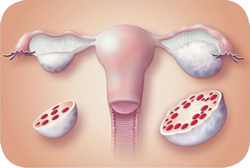 TREATMENT
Periods may be controlled by the use of the contraceptive pill, which is most suitable for women under the age of 35 who also require a good form of contraception. The other type of drug used is a progesterone-like hormone. Progesterone is the main hormone of the second half of the menstrual cycle, maintaining its length and helping reduce the heaviness. Progestagens are taken as tablets in a cyclical way, for example between days 12-26, the exact type and timing depending upon the woman's individual cycle problem.
Some women have no periods at all, and either the contraceptive pill or cyclical progestagens are advisable to avoid the risk of endometrial cancer. Around 6 periods per year is adequate to protect against this.
CHINESE MEDICINE PERSPECTIVE
In Chinese medicine, POS may correspond to several different gynaecological diseases:
I. Scanty periods
II. Amenorrhoea
III. Infertility
IV. Flooding and Trickling (Beng Lou)
V. Irregular periods
CLINICAL MANIFESTATIONS
From a purely Chinese medicine perspective, i.e. ignoring hormonal changes and histological changes in the ovaries, the clinical manifestations are:
I. Amenorrhoea or scanty periods
II. Irregular periods
III. Hirsutism
IV. Obesity
V. Infertility
Interpretation of clinical manifestations
I. Amenorrhoea or scanty periods: deficiency of Blood of the Chong Mai; also Blood stasis within the Chong Mai. Menstrual blood is a manifestation of Tian Gui and therefore there is always a Kidney deficiency which may be Yin or Yang
II. Hirsutism: dysfunction of the Chong Mai with imbalance between Qi and Blood. A deficiency of Blood in the Uterus leads to amenorrhoea, but this would mean that there is more Blood available at the skin level to promote the growth of hair
III. Obesity: Damp-Phlegm affecting both the Chong Mai and the Ren Mai
IV. Ovarian cysts: Damp-Phlegm in the Chong and Ren
V. Hormonal imbalance, raised testosterone: dysfunction of the Du Mai, the Yang aspect of the menstrual cycle
VI. Hormonal imbalance, raised LH: an increase in Yang (but only relative to Yin, oestrogen) and therefore a condition of Heat in the Liver and Chong Mai.
PATTERNS
Explanation of clinical manifestations according to patterns
I. Damp-Phlegm: there is nearly always Damp-Phlegm. The ovarian cysts are due to Damp-Phlegm
II. Kidney deficiency: there is always a Kidney deficiency in POS causing the hormonal imbalance. This can be Yin or Yang, more often Yang
III. Blood stasis: there may be Blood stasis especially if the ovarian cysts are palpable and the periods painful
IV. Liver-Fire: there may be Liver-Fire or Damp-Heat in the Liver channel
V. Blood deficiency: there may be Blood deficiency which causes scanty periods or amenorrhoea.
DAMP-PHLEGM IN THE UTERUS
Damp-Phlegm in the uterus is the main pathogenic factor in polycystic ovary syndrome. Damp-Phlegm in the uterus manifests with the following symptoms and signs:
I. Leucorrhoea
II. Tongue swollen with sticky coating at the root
III. Tendency towards obesity
IV. Fullness and heaviness of the abdomen
V. Slippery pulse
VI. Mid-cycle problems (slight pain, discomfort, heaviness, bleeding)
In addition, there may be some general symptoms of Phlegm such as expectoration of phlegm and a feeling of oppression of the chest.*
Clear the Palace
The remedy to resolve Damp-Phlegm from the uterus is Clear the Palace. This remedy is a variation of the formula Qi Gong Wan which is specific to resolve Damp-Phlegm in the uterus in infertility.
Although it contains one Kidney tonic (Tu Si Zi), Clear the Palace is primarily to resolve Damp-Phlegm and treat infertility resulting from obstruction of the uterus by Damp-Phlegm.
PATTERNS AND TREATMENT
Rather than discuss individual patterns, I will discuss common combinations of patterns.
1) Damp-Phlegm, Kidney-Yang Xu
Clinical manifestations
Obesity, hirsutism, excessive vaginal discharge, feeling of fullness and heaviness of the abdomen, irregular periods, scanty periods, amenorrhoea, backache, dizziness, tinnitus, feeling cold, cold knees and back, tiredness, low spirits, Pale and Swollen tongue with sticky coating, Weak and slightly Slippery pulse.
Treatment principle and prescriptions
1) Phase 2: tonify Kidney-Yang. Unicorn Pearl.
2) Phases 3 and 4: resolve Damp-Phlegm. Clear the Palace.
2) Damp-Phlegm, Kidney-Yang Xu, Blood Statis
Clinical manifestations
Obesity, hirsutism, excessive vaginal discharge, feeling of fullness and heaviness of the abdomen, irregular periods, scanty periods, amenorrhoea, painful periods with dark-clotted blood, abdominal pain, backache, dizziness, tinnitus, feeling cold, cold knees and back, tiredness, low spirits, Pale, Bluish-Purple and Swollen tongue with sticky coating, Weak and slightly Slippery or Firm pulse.
Treatment principle and prescriptions
2) Phase 1: invigorate Blood. Stir Field of Elixir (Invigorate Blood and Stem the Flow if the period is heavy)
3) Phase 2: tonify Kidney-Yang. Unicorn Pearl.
4) Phases 3 and 4: resolve Damp-Phlegm. Clear the Palace.
3) Damp-Phlegm, Kidney-Yin Xu, Blood Statis
Clinical manifestations
Obesity, hirsutism, excessive vaginal discharge, feeling of fullness and heaviness of the abdomen, irregular periods, scanty periods, amenorrhoea, painful periods with dark-clotted blood, abdominal pain, backache, dizziness, tinnitus, night-sweating, feeling of heat in the evening, tiredness, low spirits, Swollen tongue with sticky-rootless coating or without coating, slightly Purple on the sides, Weak and slightly Slippery or Firm pulse.
Treatment principle and prescriptions
3) Phase 1: invigorate Blood.Stir Field of Elixir (Invigorate Blood and Stem the Flow if the period is heavy)
4) Phase 2: nourish Kidney-Yin. Growing Jade.
5) Phases 3 and 4: resolve Damp-Phlegm. Clear the Palace.
4) Damp-Phlegm, Damp-Heat, Kidney-Yang Xu
Clinical manifestations
Feeling of fullness and heaviness of the abdomen, excessive vaginal discharge, acne, hirsutism, feeling of heat, dark urine, scanty periods, amenorrhoea, mid-cycle bleeding and/or pain, backache, dizziness, tinnitus, feeling cold, cold knees and back, tiredness, low spirits, Pale and Swollen tongue with sticky-yellow coating on the root, Weak and slightly Slippery pulse.
Treatment principle and prescriptions
3) Phase 2: tonify Kidney-Yang. Unicorn Pearl.
4) Phase 3: resolve Dampness, clear Heat. Drain the Jade Valley.
5) Phase 4: resolve Damp-Phlegm. Clear the Palace.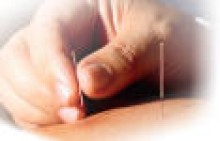 EXTRAORDINARY VESSELS TREATMENT
Ren Mai: LU-7 Lieque (on the right) and KI-6 Zhaohai (left), Ren-4 Guanyuan, ST-28 Shuidao, Zigong.
Chong Mai: SP-4 Gongsun (right) and P-6 Neiguan (left), KI-14 Siman, SP-10 Xuehai, LIV-3 Taichong.
Du Mai: SI-3 Houxi (right) and BL-62 Shenmai (left), Ren-4 Guanyuan, Du-3 (Yaoyangguan).
Du Mai and Ren Mai: SI-3 Houxi (right), BL-62 Shenmai (left), LU-7 Lieque (left), KI-6 Zhaohai (right), Ren-4 Guanyuan, Du-20 Baihui, Du-3 Yaoyangguan.Journal of Chinese Medicine, no. 51, Cao Wen Zhong and Xu Hui Qing "Some Difficult Cases Treated by Acupuncture", p. 9.
LU-7 Lieque (to activate Ren Mai)
BL-32 Ciliao to invigorate Blood
ST-25 Tianshu to move Qi and invigorate Blood
Du-1 Changqiang to invigorate Blood
ST-40 Fenglong to resolve Phlegm and Dampness
SP-6 Sanyinjiao "for a moderating effect to avoid injury to Qi"
L.I.-4 Hegu and LIV-3 Taichong to tonify and regulate Qi and Blood and to balance Yin and Yang
BL-31 Shangliao, BL-32 Ciliao, BL-33 Zhongliao, BL-34 Xialiao every 3rd treatment with Fire needle.
Journal of Chinese Acupuncture Zhong Guo Zhen Jiu, no. 4, 1999, p. 199.
-Ovarian failure: Ren-4 Guanyuan, Ren-3 Zhongji, KI-12 Dahe, BL-23 Shenshu.
Journal of Chinese Acupuncture Zhong Guo Zhen Jiu, no. 7, 2000, p. 399.
-Ovarian failure by treating the Du Mai: Du-14 Dazhui, Du-13 Taodao, Du-12 Shenzhu, Du-10 Lingtai, Du-9 Zhiyang, KI-1 Yongquan. (Explanation: Du Mai, together with Chong and Ren Mai, connects with the Heart and Kidneys).
Journal of Chinese Acupuncture Zhong Guo Zhen Jiu, no. 12, 1999, p. 727.
-Ovarian failure treated with moxibustion: Ren-4 Guanuan, Zigong, SP-6 Sanyinjiao.
By Giovanni Maciocia
Ear infections and antibiotics
21/08/2014
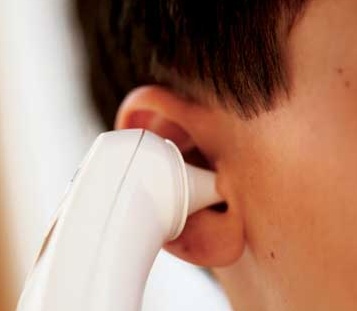 A recent issue of the Journal of the American Medical Association carried an interesting article on the use of antibiotics for acute otitis media (AOM) or middle-ear infection. The reference is:
Tumaini R. Coker et al “Diagnosis, Microbial Epidemiology, and Antibiotic Treatment of Acute Otitis Media in Children” - A Systematic Review, in Journal of the American Medical Association, Vol. 304, No. 19, November 17, 2010, pp. 2161-2169.
The objective of the study was to perform a systematic review on AOM diagnosis and treatment with antibiotics. The study selected studies with a criterion standard, observational studies, randomized controlled trials on AOM microbiology and randomized controlled trials assessing antibiotic treatment.
The conclusion of the study was that antibiotics are modestly more effective than no treatment but cause adverse effects in 4% to 10% of children. Therefore, giving children antibiotics for ear infections does little to speed their recovery while raising the risk of some side effects.
The study found that 80 out of 100 otherwise healthy children would recover from an acute ear infection within a few days if given medication only to relieve pain or fever.
The study found that it does not matter which antibiotic is used to treat an ear infection when antibiotics are warranted. It found older types such as amoxicillin work as well as newer and more expensive antibiotics: indeed, newer antibiotics seem to cause more side-effects.
The study was designed to review existing research on the topic for the American Academy of Pediatrics, which is in the process of revising its guidelines for treating uncomplicated acute otitis media. The pediatricians’ group and the American Academy of Family Physicians have suggested that “observation” (i.e. avoiding antibiotics) is an option for treating ear infections in otherwise healthy children between the ages of 2 and 12. See http://aappolicy.aappublications.org/cgi/content/full/pediatrics;113/5/1451.
Of the three basic types of ear infections, acute otitis media may benefit from antibiotics because it is often caused by a bacteria. However, it can also be caused by a virus, which will not respond to antibiotics. Another type of ear infection, otitis media with effusion, causes a buildup of fluid in the middle ear. That is also caused by a viral infection, against which antibiotics are ineffective.
This is interesting from the perspective of Chinese medicine. I have observed over and over again in practice that antibiotic treatment seems to have little effect on ear infections (whilst, by contrast, they have some effect on chest infections). One obvious reason for this is that, as mentioned above, some ear infections may be viral. There may be another interesting reason. The ears are on the Shao Yang area of the body; indeed the Triple Burner and Gall-Bladder channels (Shao Yang channels) course around the ears. In the context of exterior diseases, i.e. diseases caused by external Wind, the Shao Yang stage behaves quite differently than the Tai Yang or Yang Ming stages. The Tai Yang stage is a purely exterior stage when Wind is located on the Exterior of the body, i.e. in the Wei portion. The Yang Ming stage, on the other hand, is an interior stage that occurs when the pathogenic factor has penetrated into the Interior and it has transformed into Heat.
The Shao Yang stage is quite different: it is the stage that is the “hinge” between the Exterior and the Interior. Because of this nature, pathogenic factors can get “stuck” in the Shao Yang stage, bouncing between the Exterior (Tai Yang) and the Interior (Yang Ming). When it is on the Exterior, the patient feels cold; when in the Interior, the patient feels hot: hence the famous “alternation of chills and fever” of the Shao Yang stage.
Another characteristic of the Shao Yang stage, and one that is related to its being the “hinge”, is that pathogenic factors can get “stuck” there and remain in the body for a long time. This cannot happen at the Tai Yang stage because, at this stage, either the Wind is expelled or it changes into Heat and penetrates in the Interior. At the Yang Ming stage too, the pathogenic factor is either cleared or it will injure Yin and it will penetrate into the Yin.
Because of the tendency of pathogenic factors to linger in the Shao Yang, this may be a cause for antibiotics not working and for middle-ear infections becoming chronic which, in children, they very frequently do. Moreover, the use of antibiotics may tend to injure the Stomach and lead to the formation of a residual pathogenic factor in the ears that is usually Damp-Heat. A residual pathogenic factor in the ear from the improper use of antibiotics is the most common cause of chronic ear pathology in children.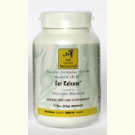
The remedy "Ear Release" in The Little Treasures was designed to treat chronic retention of Damp-Heat in the ears in children.
By Giovanni Maciocia
FOCUS ON A REMEDY: CHEMO-SUPPORT
24/06/2014
This article is dedicated to the discussion of the remedy Chemo-Support which is intended to minimize the side effects of chemotherapy. This remedy was formulated 15 years ago and it has been used by many patients undergoing chemotherapy.
CHEMOTHERAPY SIDE-EFFECTS FROM THE POINT OF VIEW OF CHINESE MEDICINE
If we analyze the side-effects or chemotherapy, there are important differences between various cytotoxic drugs and one could conceivably formulate an individual Chinese herbal formula for each. However, one can identify common characteristics among the above side-effects. We can attempt to group the side-effects according to the Chinese pathological pattern induced by the various cytotoxic drugs. Looking at the side-effects of each drug, four patterns in particular stand out:
1. DEFICIENCY OF QI, BLOOD AND YIN
Hair loss, diarrhoea, nail ridging, bone-marrow suppression, malaise, fatigue, depression, loss of appetite, neurological damage, dizziness, constipation, numbness, tingling, paraesthesia of hands and feet.
2. ST-QI REBELLING UPWARDS
Nausea, vomiting.
3. STOMACH HEAT
Mouth ulcers, stomatitis, stomach ulcers.
4. BLOOD HEAT
Haematuria, fever, skin reactions, cystitis.
Thus, we can deduce from the analysis of the above patterns that cytotoxic drugs cause the following:
1. Qi, Blood and Yin deficiency (of Stomach, Lungs, Liver and Kidneys)
2. Stomach-Qi rebelling upwards
3. Stomach Heat
4. Blood Heat.
The treatment principles to adopt are therefore (the herbs used are indicated in brackets):
Tonify Qi, Blood and Yin (Huang Qi Radix Astragali, Ren Shen Radix Ginseng, Ling Zhi Ganodermae, Mai Men Dong Radix Ophiopogonis, Dang Gui Radix Angelicae sinensis, Nu Zhen Zi Fructus Ligustri lucidi, Huang Jing Rhizoma Polygonati)
Subdue rebellious Stomach-Qi (Lu Gen Rhizoma Phragmitis, Ban Xia Rhizoma Pinelliae preparatum, Sha Ren Fructus Amomi)
Clear Stomach Heat (Lu Gen Rhizoma Phragmitis, Zhi Mu Radix Anemarrhenae)
Cool Blood (Mu Dan Pi Cortex Moutan)
ANALYSIS OF INDIVIDUAL HERBS IN CHEMO-SUPPORT
- Huang Qi Radix Astragali: tonify Qi and raise immune response.
- Ren Shen Radix Ginseng: tonify Qi.
- Ling Zhi Ganodermae: tonify Qi and Blood and raise the immune response.
- Mu Dan Pi Cortex Moutan: cool Blood.
- Zhi Mu Radix Anemarrhenae: clear Heat.
- Fu Ling Poria: resolve Dampness.
- Chen Pi Pericarpium Citri reticulatae: resolve Dampness, stop nausea.
- Mai Men Dong Radix Ophiopogonis : nourish Yin.
- Dang Gui Radix Angelicae sinensis: nourish Blood
- Ban Xia Rhizoma Pinelliae preparatum: resolve Phlegm, subdue rebellious Stomach-Qi, stop nausea and vomiting.
- Lu Gen Rhizoma Phragmitis: clear Stomach-Heat, stop vomiting.
- Nu Zhen Zi Fructus Ligustri lucidi
- Sha Ren Fructus Amomi: move Qi, resolve Dampness, stop nausea.
- Huang Jing Rhizoma Polygonati: tonify Qi, nourish Yin and Jing.
- Gan Cao Radix Glycyrrhizae uralensis: harmonize.
DOSAGE AND PROTOCOL
Chemo-Support works better if it is started some time before the beginning of chemotherapy and continued for about two weeks after the end. It is important to note that “during the treatment” means during the course of treatment, i.e. also in the days of break from the treatment. The dosage is as follows:
- Two weeks before start of treatment: 2 tablets a day
- Four days before the start of treatment: 2 tablets twice a day
- During the treatment: 3 tablets three times a day
- After the end of the treatment for about 4 weeks: 2 tablets twice a day
It is best to take the tablets away from meals, i.e. about 1 hour before or after a meal, swallowed with hot water. The tablets should also be taken separately from other medication, at least 1 hour away. If the patient feels very nauseous and finds it difficult to swallow the tablets, these could be crushed and powdered, immersed in a small amount of hot water with three slices of fresh ginger and the water sipped slowly.
The dosage during treatment indicated above should be adjusted according to the severity of the side-effects and the above dosage could be reduced or increased.
If the patient is receiving both chemo- and radio-therapy and is taking both Chemo-Support and Radio-Support, the dosage of each should be reduced. Adjustments can be made according to the patient’s side-effects and timing of therapies in this situation by using a higher ratio of Chemo-Support during the days surrounding chemotherapy or when its side-effects are heightened. Similarly, the dosage of Radio-Support can be increased if the side-effects experienced from radiotherapy are more severe, or during the days surrounding the administration of radiotherapy.
Chemo-Support should be discontinued approximately four weeks after the end of the treatment when the condition should be reassessed and a different formula given. By contrast, Radio-Support should be continued for at least 6 weeks after the end of radiotherapy.
ACUPUNCTURE TREATMENT OF CHEMOTHERAPY SIDE EFFECTS
Acupuncture can be used to great effect, in conjunction with Chemo-Support to reduce the side-effects of chemotherapy. Indeed, acupuncture can complement the use of Chemo-Support by tailoring the treatment to the specific side-effects suffered by the patient. The following are suggested point combinations for specific symptoms and signs.
Fatigue
Ren-12 Zhongwan, ST-36 Zusanli, SP-6 Sanyinjiao, BL-20 Pishu, BL-21 Weishu.
Nausea, vomiting
Ren-13 Shangwan, P-6 Neiguan, ST-34 Liangqiu, ST-36 Zusanli. In addition to acupuncture, the following massage technique is very effective to combat nausea and vomiting: apply a massage oil liberally to the lower legs, make a loose fist with your hands, starting from ST-36, massage downwards along the Stomach channel using the knuckles of the index fingers all the way down to the ankle and then massage upwards along the Spleen channel using your thumbs. This technique harmonizes the ascending and descending of Stomach- and Spleen-Qi, stimulating Stomach-Qi to descend and Spleen-Qi to ascend.
Alopecia
BL-17 Geshu (with direct moxa cones), ST-36 Zusanli, SP-6 Sanyinjiao, LIV-8 Ququan, BL-20 Pishu, BL-23 Shenshu. Add Shou Wu Pian or Glorious Sea to Chemo-Support.
Myelo-suppression
BL-17 Geshu (with direct moxa cones), BL-11 Dashu (with direct moxa cones), BL-20 Pishu, BL-23 Shenshu.
Stomatitis, mouth ulcers
ST-44 Neiting, L.I.-4 Hegu, L.I.-11 Quchi.
Cystitis
Ren-3 Zhongji, BL-63 Jinmen, BL-28 Pangguangshu, BL-32 Ciliao, SP-9 Yinlingquan.
Fever
L.I.-11 Quchi, KI-2 Rangu, Du-14 Dazhui.
Skin rash
L.I.-11 Quchi, SP-10 Xuehai.
Diarrhoea
ST-25 Tianshu, ST-37 Shangjuxu.
BIBLIOGRAPHY
1) Perry M, Anderson C, Dorr V, Wilkes J, The Chemotherapy Sourcebook, Williams & Wilkins, Baltimore, Maryland, 1999.
2) Skeel R, Handbook of Cancer Chemotherapy, Williams & Wilkins, Baltimore, Maryland, 1999.
3) Zhu YP, Chinese Materia Medica, Harwood Academic Publishers, Amsterdam, 1998.
4) Bensky D and Gamble A, Chinese Herbal Medicine Materia Medica, Eastland Press, Seattle, 1993.
5) Chang H.M. and But P.P.Hay, Pharmacology and Applications of Chinese Materia Medica, World Scientific, Hong Kong, Vol. I, 1986.
6) Chen J K, Chen T T, Chinese Medical Herbology, Art of Medicine Press, City of Industry, CA, USA 2004.
By Giovanni Maciocia
Stomach-Yin Deficiency and Jade Spring
21/03/2014
STOMACH-YIN DEFICIENCY
Aetiology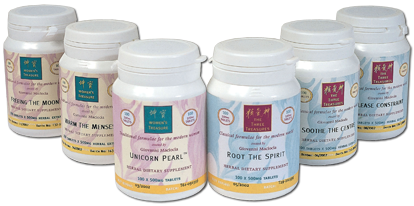
The Stomach is a Yang organ but it frequently suffers from Yin deficiency. Indeed, I would say that Stomach-Yin deficiency is very common in the patients we see. The cause of Stomach-Yin deficiency is irregular eating habits. That includes eating late at night, eating in a hurry, eating while working, eating standing up, etc. all very common habits in the patients we see.
Another less common cause of Stomach-Yin deficiency is eating too drying foods. The Stomach likes warm but moist foods such as soups, porridge or rice congee. “Drying” foods includes broiled or baked foods which would include bread. Broiling and baking makes foods dry and causes dryness when eaten in excess. That dryness can eventually lead to Stomach-Yin deficiency. Interestingly, there is very little broiling and baking in Chinese cooking and even bread is steamed (man tou) rather than baked.
Diagnosis
How do we know there is Stomach-Yin deficiency? Primarily from lack of coating on the tongue. The normal tongue coating derives from the Stomach rotting and ripening and it indicates a normal functioning of the Stomach. When Stomach-Yin is deficient, there is no coating on the tongue.
However, there are some intermediate stages before reaching a full-blown Stomach-Yin deficiency and no coating on the tongue. The very beginning of Stomach-Yin deficiency will manifest with a coating without root. A coating without root looks likes it is resting on the tongue rather than growing out of the tongue body the same way grass grows out of the soil.
The next stage of Stomach-Yin deficiency is manifested with a tongue that lacks a coating in patches, wherever the patches may be: they may not necessarily be in the Stomach area in the centre of the tongue.
Please note that when the tongue lacks a coating but has a normal colour, it indicates Stomach-Yin deficiency without Empty Heat: it is only when the tongue lacks a coating and it is red, that it indicates Empty Heat deriving from Stomach-Yin deficiency.
Another sign of Stomach-Yin deficiency is a Stomach crack (or cracks) on the tongue. However, Stomach cracks may indicate a constitutional tendency to Stomach-Yin deficiency rather than the actual pathology. In any case, when I see such cracks I nourish Stomach-Yin.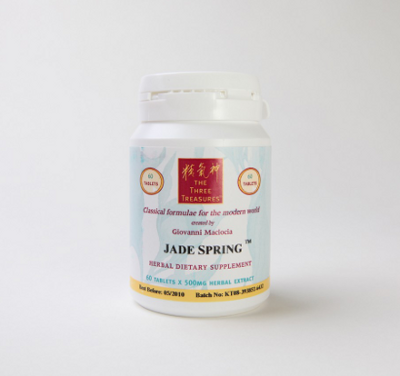 Treatment
The treatment depends a lot on the tongue: if there is coating but it is either rootless or in patches, I use Central Mansion, a variation of Shen Ling Bai Zhu San Ginseng-Poria-Atractylodes Powder.
If the coating is missing entirely, I use Jade Spring, a variation of Sha Shen Mai Dong Tang Glehnia-Ophiopogon Decoction.
With acupuncture, the points to nourish Stomach-Yin are very simple: Ren-12 Zhongwan, ST-36 Zusanli and SP-6 Sanyinjiao.
Obviously treatment must include also a change in eating habits
By Giovanni Maciocia
JOY, AN EMOTIONAL CAUSE OF DISEASE?
21/02/2014
It always seems strange that joy should be listed among the emotional causes of disease in Chinese medicine. And yet, it has always been mentioned as an emotional cause of disease since ancient times. Strangely, the Chinese character for “joy” [xi ?] is the only one of the emotions that is not based on the ‘heart” radical. The character Xi is based on the radical for “drum” plus “mouth”, i.e. beating a drum and singing in happiness. Incidentally, two xi characters next to each other are called “double happiness” and are a symbol of a wedding.
It is interesting that, in the list of emotions as causes of disease, “joy” is always top of the list, followed by anger. For example, these are the emotions listed by Confucius: joy, anger, grief, fear, love, hatred, desire. These are the emotions listed by Lao Zi: joy, anger, worry, sadness, love, hatred, desire. It is interesting that both lists include “love” as an emotional cause of disease! Chen Wu Ze (1174) lists: joy, anger, pensiveness, worry, sadness, fear, shock. These became the widely accepted “7 emotions” of Chinese medicine. Zhang Jie Bin (1624) lists eight emotions: joy, anger, pensiveness, worry, sadness, fright, fear, shock.1
A normal state of joy is obviously not in itself a cause of disease; on the contrary, it is a beneficial mental state which promotes a smooth functioning of the Internal Organs and their mental faculties. The “Simple Questions” in chapter 39 says: “Joy makes the Shen peaceful and relaxed, it benefits the Ying and Wei Qi and it makes Qi relax and slow down.”2 On the other hand, in chapter 2 the “Simple Questions” says: “The Heart … controls joy, joy injures the Heart, fear counteracts joy.”3 Other passages in the Nei Jing clearly refer to joy as a cause of disease. For example, chapter 5 of the “Simple Questions” says: “Joy injures the Heart.”4 Chapter 8 of the “Spiritual Axis” says: “Joy scatters the Heart and deprives it of its residence.”5
Fei Bo Xiong (1800–1879) in “Medical Collection of Four Doctors from the Meng He Tradition” says: “Joy injures the Heart … [it causes] Yang Qi to float and the blood vessels to become too open and dilated …”6
I think that the best (and probably only) way to understand “joy” as an emotional cause of disease is in the light of the three main philosophies of China, i.e. Daoism, Confucianism and Buddhism. I think that “joy” is akin to “desire” and “craving” from the point of view of these three philosophies. Of the three philosophies, Daoism and Confucianism are the main ones because Buddhism was not widespread in China at the time when joy was already considered as a cause of disease, i.e. during the Warring States Period (476-221 BC).
All these three religions (or rather philosophies), for different reasons, advocated emotional restraint and avoidance of “craving” and “desire”. For example, the Daoists shunned social relations and advocated “following the Dao”, “absence of desire” (wu yu) and “non-action” (wu wei). They felt that joy would stop us from following the Dao as much as other emotions such as anger. The great Daoist Zhuang Zi (370-301 BC?) talks about wu qing, i.e. absence of feelings: “What I mean when I say that they [sages] are wu qing (without feelings) is that they do not injure their own persons with likes and dislikes and are always responsive to what is natural without trying to increase life.”7
The ancient Daoist text Nei Ye (Inner Training), older than the Dao De Jing, has this interesting passage on emotions:
The vitality of all people
Inevitably comes from their peace of mind
When anxious, you lose this guiding thread
When angry, you lose this basic point
When you are anxious or sad, pleased or angry,
The Dao has no place within you to settle
Love and desire: still them!
If you are tranquil, you will attain it (the Dao)
If you agitated, you will lose it.8
Indeed, to the Daoists, stimulation has a negative connotation. Zhuang Zi says concisely: “When desire is profound, the force of Heaven is superficial.” This means that desire turns us away from the vitality of Heaven stirring emotions within us that make us stray from the path of the Dao.
Confucianists believed that the true “gentleman” (a mistranslation of the term jun zi that actually applies to both men and women) is not stirred by emotions because these cloud his or her true nature. They used the image of a pond with a muddy bottom. If the water is very still, it becomes clear: if we stir the bottom, the water becomes turbid. The pond is our human nature which is naturally “clear”; if we are stirred by emotions, these will cloud our human nature. Consider this passage from Xun Zi (a Confucianist philosopher, 312-230 BC): “It is ever so that the Heart-Mind [Xin] is naturally full, naturally born and naturally perfected. Should its function be impaired, it is certain to be due to sorrow and happiness, joy and anger, desire and profit-seeking. If we can rid ourselves of sorrow and happiness, joy and anger, desire and profit-seeking, the Heart-Mind [Xin] will revert to its flawless state.”9
The Buddhists considered desire and craving as the very root of human suffering. Greed (excessive desire), hatred and ignorance are at the centre of the Wheel of Life and greed is strangely symbolized by a rooster. According to them, our very existence begins out of the desire and craving of a mind in the Bardo state (the period after death and before the next reincarnation): the mind desires the warmth of a womb and it reincarnates. Later on in life, desire causes our mind to try to grasp objects like a monkey sways from tree to tree (that is why the Buddhist Wheel of Life has, among others, the image of a monkey on a tree).
So, what relevance has this view of “joy”, “desire” and “craving” to us in the 21st century? I think that these emotions are indeed causes of disease and I would call the modern equivalent of these emotions “overstimulation”. I think that this, rather than “joy”, would probably be the best translation of xi. Our society indeed bombards us with objects of craving and it artificially creates “desire” and “craving” through advertising; on the other hand, it provides and fosters substances that overstimulate us. We are all “overstimulated” by entertainment, frenetic lifestyle, consumerism, coffee, tea, tobacco, alcohol, TV, video games, “recreational drugs”, medicinal drugs, and sexual stimulation.
The main stimulant drugs are:
• Caffeine
• Nicotine
• Cocaine
• Amphetamines
• Prescription drugs e.g. Ritalin® (Methylphenidate), Adderall® (amphetamine and dextroamphetamine), Dexedrine® (dextroamphetamine), Strattera® (atomoxetine), Focalin® (Dexmethylphenidate) etc.
Interestingly, antidepressants are not actually stimulants and do not usually lead to “joy”. My experience with depressed patients on anti-depressants is that these drugs “blunt” all emotions; they do somehow lift depression but at the expense of alertness and enthusiasm. Indeed, some anti-depressants are used for anxiety with some effect.
I think that the ‘blunting” effect of anti-depressants is reflected in the resulting pulse, i.e. a pulse that feels “stagnant” and does not have the healthy “wave” of the normal pulse. It is not Wiry, not Tight but I describe it as “stagnant” and “reluctant”. While most authors see anti-depressants as mood-elevating and stimulants, I do not share that view and the pulse qualities described above seem to confirm this.
Overstimulation, in the broad sense indicated above, makes the Heart larger. This leads to excessive stimulation of the Heart, which in time, may lead to Heart-related symptoms and signs. These may deviate somewhat from the classical Heart patterns. The main manifestations would be palpitations, over-excitability, insomnia, restlessness, talking a lot and a red tip of the tongue. The pulse would typically be slow, slightly Overflowing but Empty on the left Front position. It may seem strange that “joy” or overstimulation makes the pulse slow. This is because overstimulation makes the heart larger and therefore slows down circulation (shock, by contrast, makes the heart smaller).
Giovanni Maciocia
The points I use for overstimulation are HE-7 Shenmen, P-7 Daling, Du-19 Houding, Ren-15 Jiuwei.
1. Zhang Jie Bin (also called Zhang Jing Yue) 1982 Classic of Categories (Lei Jing), People’s Health Publishing House, Beijing, p. 424. First published in 1624.
2. 1979 The Yellow Emperor’s Classic of Internal Medicine-Simple Questions, p. 221.
3. Tian Dai Hua 2005 The Yellow Emperor’s Classic of Internal Medicine - Simple Questions p. 38.
4. Ibid., p. 38.
5. Spiritual Axis, p. 25.
6. Medical Collection of Four Doctors from the Meng He Tradition, p. 40.
7. Ames RT and Hall DL A Philosophical Translation of the Dao De Jing, Ballantine Books, New York, 2003, p. 47.
8. Roth H Original Tao, Columbia University Press, New York, 1999, p. 94.
9. Lee J Xunzi and Early Chinese Naturalism, State University of New York Press, Albany, 2004, p. 35.
SEXUAL LIFE IN CHINESE MEDICINE
17/01/2014
 Chinese medicine has always stressed the importance of excessive sexual activity: in this article, I would like to bring to your attention two factors:
- The distinction between men and women in sexual activity
- Insufficient sexual activity as a cause of disease
When discussing sexual activity, Chinese books never distinguish between men and women. There are substantial differences in the sexual physiology of men and women so that excessive sexual activity is less of a cause in disease in women than it is in men. The reason lies in the nature of Tian Gui.
Tian Gui is the generative essence that renders men and women fertile. It is mentioned in the very first chapter of the Su Wen: “When a girl is 14 Tian Gui arrives, the Ren Mai is open, the Chong Mai is flourishing, menstruation starts and she can conceive”. For boys, “When a boy is 16, Kidney-Qi is strong, Tian Gui arrives, sperm is discharged, Yin and Yang are in harmony and he can fertilize.” Thus, Tian Gui is the essence that allows women to conceive and men to fertilize: in women, it is the ova, in men, sperm. Tian Gui is a direct manifestation of Kidney-Jing. In men, loss of sperm therefore implies a loss of Jing and therefore excessive (too frequent) sexual activity may diminish Jing; in women, during sexual activity there is no corresponding loss of Jing as they obviously do not lose ova during sexual activity and therefore there is no corresponding loss of Jing.
While Chinese books always mention excessive sexual activity as a cause of disease, they never mention insufficient sexual activity as a possible cause of disease. This has not always been so as, during past dynasties, all sex manuals explicitly said that sexual activity is essential for the health of both men and women. Indeed, sexual abstinence was viewed with suspicion (as Buddhist nuns were).
Some Chinese doctors considered lack of sex and sexual frustration as a major cause of emotional stress in women. Sexual desire depends on the Minister Fire and a healthy sexual appetite indicates that this (physiological) Fire is abundant. When sexual desire builds up the Minister Fire blazes up and Yang increases : the orgasm is a release of such accumulated Yang energy and, under normal circumstances, it is a beneficial discharge of Yang-Qi which promotes the free flow of Qi. When sexual desire builds up, the Minister Fire is stirred: this affects the Mind and specifically the Heart and Pericardium. The Heart is connected to the Uterus via the Uterus Vessel (Bao Mai) and, in women, the orgasmic contractions of the uterus discharge the accumulated Yang energy of the Minister Fire.
When sexual desire is present but does not have an outlet in sexual activity and orgasm, the Minister Fire can become pathological, accumulate and give rise both to Blood Heat and to stagnation of Qi in the Lower Burner. This accumulated Heat will stir the Minister Fire further and harass the Shen, while the stagnation of Qi in the Lower Burner can give rise to gynaecological problems such as dysmenorrhoea.
Of course, if sexual desire is absent, then lack of sexual activity will not be a cause of disease. Conversely, if one abstains from sexual activity but the sexual desire is strong, this will also stir up the Minister Fire. Thus, the crucial factor is the mental attitude and sexual desire.
With regard to sexual frustration, Qing dynasty’s Chen Jia Yuan wrote very perceptively about some women’s emotional longing and loneliness. Among the emotional causes of disease he distinguishes “worry and pensiveness” from “depression”. He basically considers depression, with its ensuing stagnation, due to emotional and sexual frustration and loneliness. He says: “In women...such as widows, Buddhist nuns, servant girls and concubines, sexual desire agitates [the mind] inside but cannot satisfy the Heart. The body is restricted on the outside and cannot expand with the mind [i.e. the mind longs for sexual satisfaction but the body is denied it]. This causes stagnation of Qi in the Triple Burner and the chest; after a long time there are strange symptoms such as a feeling of heat and cold as if it were malaria but it is not. This is depression”.
Although the above thoughts derive from Dr Chen’s clinical experience with servant girls, Buddhist nuns and concubines and should therefore be seen in the social context of the Qing dynasty, they also have relevance to our times as he is essentially talking about sexual frustration and loneliness and his reference to widows confirms this (in old China widows were shunned and seldom remarried). He perceptively refers to sexual craving agitating the body but not finding a satisfaction in the Heart and mind: besides sexual frustration, he is also referring to emotional frustration and craving for love.
Thus, considering the social position of women in ancient China and the frequency of the above-mentioned emotional frustration, it is no wonder that Qi stagnation occupies such a central place in women’s pathology, and emotional stagnation in women was often the result of sexual frustration, separation, loss and loneliness: these are the recurrent "anger" in Chinese medicine books.
Sexual frustration was a common cause of disease especially from the Song dynasty onwards as Confucianists frowned upon sexual activity and believed that it should be carried out in secret and that there should be no public display of affection (as in modern China). The current pruderie of Chinese medicine and society is clearly a result not so much of the Communist influence but of the Qing dynasty's Confucian influence. It is important to understand, however, that these rules did by no means imply that sex was a “sin” and woman was the origin of such sin as in the Christian view. The Confucianist abhorrence of sexual philandering was determined mainly by the fear that promiscuity might disrupt the sacred family life.
i. Eight Secret Books on Gynaecology, p.152.
Written by Giovanni Maciocia
ON STAGNATION OF LUNG- AND HEART-QI
19/12/2013
ON STAGNATION OF LUNG- AND HEART-QI

Liver-Qi stagnation is one of the most "popular" diagnoses among Western practitioners. Liver-Qi stagnation is certainly very common but, in my opinion, it is over-diagnosed and over-emphasized. Besides that, it is hardly ever mentioned that practically every organ - not just the Liver - may be subject to Qi stagnation. For example, the following organs suffer from Qi stagnation: Stomach, Spleen, Lungs, Heart, Intestines, Gall-Bladder, Triple Burner, Bladder and even the Kidneys.
The present article will concentrate primarily on Qi stagnation of the Lungs and Heart because such stagnation is particularly common in mental-emotional problems. Related to the over-diagnosis of Liver-Qi stagnation is also the over-emphasis on anger among the emotions. Over-emphasis on anger is, in my opinion, also present in China. It is easy to see why that would be as anger is the most disruptive of the emotions: if you are angry, you rebel and that is not done in China, whether in the Neo-Confucian past nor now. Indeed the very word used in Chinese medicine to indicate "rebellious" (or "counterflow") Qi [ni ?] means "to rebel", "to disobey", "to defy". The opposite of Ni in Chinese medicine is shun [?] which indicates Qi going the right way. The word shun means :"to obey", "to act in submission to", with a clear political significance. Please note that these two words are already in the Nei Jing.
Whilst it is easy to explain why anger would be over-emphasized in China, I am not sure why it is in the West. By contrast, Lung- and Heart-Qi stagnation is usually caused by sadness, grief or worry: if one is sad, one does not rebel, so the Chinese political system (whether ancient or modern) is not threatened by these emotions. I believe that such emotions, more than anger, are extremely common and pervasive in the patients we see. What are sadness and grief caused by in Western patients? Apart from the obvious causes due to bereavement, very many Western patients of all ages suffer from sadness and grief deriving from various types of loss such as the loss from the break-up of relationships or marriage. In other words, sadness and grief are primarily about loss, whether it be the loss of a dear one from death or the loss of a partner through separation.
McLean (who elaborated the theory of the triune brain) suggests that the origins of human language were most likely in infant-mother interaction, babbling based on vowel-consonant combinations beginning about 8 weeks after birth. He singles out the separation cry - a slowly changing tone with a prolonged vowel sound (aaah), a distressing cry linked with the most painful emotion, separation.
I believe that the sadness and grief deriving from separation are probably the most basic and primordial (and therefore most powerful) emotions that plays a huge role in the mental-emotional problems we see in practice. As for worry, it is easy to see how such an emotion is so prevalent in the West where life has such a hectic pace.
Sadness, grief and worry affect the Lungs directly as they are emotions pertaining to the Lungs, but they also affect the Heart. The Su Wen says in chapter 39: "Sadness makes the Heart cramped and agitated; this pushes towards the lungs' lobes, the Upper Burner becomes obstructed, Nutritive and Defensive Qi cannot circulate freely, Heat accumulates and dissolves Qi."
In women, Lung-Qi stagnation affects the chest and breasts and, in the long run, it can give rise to breast lumps (benign or malignant) as the Lung channel flows on the outside of the breasts. In my experience, in Western women, this is a more common cause of breast lumps than Liver-Qi stagnation.
Dr Xia Shao Nong thinks that breast lumps and breast cancer are due to sadness and grief deriving from widowhood, breaking of relationships, divorce, death of one's children, and bereavement at a young age from the death of ones spouse. These events, especially if they occur suddenly, upset the Mind and lead to Qi stagnation and Qi depletion. It is interesting to note that all the events mentioned by Dr Xia involve separation and loss.
The points I use for sadness and grief are LU-7 Lieque, Du-24 Shenting, Ren-15 Jiuwei, HE-7 Shenmen, BL-13 Feishu and BL-42 Pohu.
As for worry, Chen Wu Ze (1174) says: "Worry injures the Lungs and makes Qi accumulate." Chapter 8 of the Ling Shu confirms that worry knots Qi: "Worry causes obstruction of Qi so that Qi stagnates."
Please note that Qi stagnation may be accompanied by Qi deficiency and this is particularly true in the case of Lungs and Heart. Emotions such as sadness and grief deplete Qi and cause Qi deficiency. However, as deficient Qi in the chest fails to move properly (because it is deficient), some Qi stagnation also ensues.
LUNG-QI STAGNATION
The clinical manifestations of Lung-Qi stagnation are: a feeling of lump in the throat, difficulty in swallowing, a feeling of oppression or distension of the chest, slight breathlessness, sighing, sadness, slight anxiety, depression.
Tongue: slightly red on the sides in the chest areas (see blog of 23 March 2010).
Pulse: very slightly Tight on the right-Front position.
Acupuncture: LU-7 Lieque, LU-3 Tianfu, ST-40 Fenglong, Ren-15 Jiuwei, P-6 Neiguan, BL-13 Feishu, BL-42 Pohu. (Please note that ST-40 is used here not to resolve Phlegm but to open the chest. See Blog of 24 August 2010).
Prescription: Open the Heart , Three Treasures (Ban Xia Hou Po Tang Pinellia-Magnolia Decoction).
HEART-QI STAGNATION The clinical manifestations of Heart-Qi stagnation are: palpitations, a feeling of distension or oppression of the chest, depression, a slight feeling of lump in the throat, chest and upper epigastric distension, dislike of lying down, weak and cold limbs, slightly purple lips, pale complexion.
Tongue: slightly pale-purple on the sides in the chest area.
Pulse: Empty but very slightly Overflowing on the Left-Front position.
Acupuncture: HE-5 Tongli, HE-7 Shenmen, P-6 Neiguan, Ren-15 Jiuwei, Ren-17 Shanzhong, LU-7 Lieque, ST-40 Fenglong, L.I.-4 Hegu.
Prescription Open the Heart , Three Treasures (Ban Xia Hou Po Tang Pinellia-Magnolia Decoction), Mu Xiang Liu Qi Yin Aucklandia Flowing Qi Decoction
By Giovanni Maciocia
THREE TREASURES REMEDIES FOR PAIN
14/11/2013
This article lists the main Three Treasures remedies for pain. These will be classified according to channel and Zangfu pain and also according to area of pain.
CHANNEL PAIN
The Three Treasures remedies treating channel pain are:
Brocade Sinews
Nourish the Root and Clear Wind
Clear Channels
Benefit the Sinews
Brocade Sinews treats channel pain from Bi syndrome occurring against a background of Blood deficiency. This would be a dull ache occurring in the limbs. It would be aggravated by cold and alleviated by warmth and rest.
Nourish the Root and Clear Wind treats channel pain from Bi syndrome occurring against a background of Yin deficiency, mostly in the elderly.
Clear Channels treats channel pain from Bi syndrome due to Damp-Heat. This manifests with joints that are painful, red and swollen.
Benefit the Sinews treats channel pain from Bi syndrome due to Phlegm and Blood stasis in the joints. This would correspond to the chronic stage of rheumatoid arthritis with deformities of the joints.
ZANGFU PAIN
There are many Three Treasures remedies to treat Zangfu pain and we can classify them according to the Zangfu treated:
Liver
Bend Bamboo, Break into a Smile, Brighten the Eyes, Drain Fire, Release Constraint, Smooth Passage, Stir Field of Elixir
Stomach and Spleen
Central Mansion, Ease the Muscles, Smooth Passage, Soothe the Centre.
Kidneys and Bladder
Separate Clear and Turbid, Clear the Root, Water Passages
Intestines
Smooth Passage, Ease the Muscles
The following is a brief description of the application of each of the above remedies for pain.
Liver
Bend BambooThis remedy is for headache deriving from Liver-Yang rising occurring against a background of Liver-Blood deficiency. It may be used for both chronic or acute pain (by increasing the daily dosage in case of acute pain).
Break into a Smile
This is for abdominal pain deriving from Liver-Qi stagnation. It is a variation of Chai Hu Shu Gan Tang which is the prescription for this type of pain. This would be the typical distending pain.
Brighten the Eyes
This is for a dull headache on the forehead or vertex deriving from Liver-Blood deficiency. It is therefore for a Deficiency type of pain.
Drain Fire
This is for headache deriving from Liver-Fire. This would definitely be a Full type of pain and it would be severe and throbbing in character. It is, however, also for pain in the Lower Burner, such as pain from cystitis or urethritis.
Release Constraint
This is for pain deriving from Liver-Qi stagnation: it is for a Full type of pain when the pulse is Wiry in all positions. This pain could be in the hypochondrium or epigastrium.
Smooth Passage
This is for abdominal pain from Liver-Qi stagnation and Spleen-Qi deficiency. It is therefore for a mixed Fullness-Deficiency pain.
Stir Field of Elixir
This is for lower abdominal pain from Blood stasis (Full type of pain).
Stomach and Spleen
Central Mansion
This is for a dull epigastric pain deriving from Spleen-Qi and Stomach-Yin deficiency: it is a Deficiency-type pain.
Smooth Passage
This is for abdominal pain deriving from Liver-Qi stagnation and Spleen-Qi deficiency: it is therefore both from a Fullness and a Deficiency. It is specific for irritable bowel pain.
Soothe the Centre
This is for epigastric pain deriving from Spleen-Qi deficiency, Dampness and Qi stagnation: it is therefore a mixed Fullness-Deficiency pain.
Ease the Muscles
This is for epigastric pain deriving from Damp-Heat in the Stomach. It is pain of a Full nature. It may also be used for muscle ache in post-viral fatigue syndrome.
Kidneys and Bladder
Separate Clear and Turbid
This is for urinary pain deriving from Dampness in the urinary passages and Qi deficiency. It is a mixed Fullness-Deficiency pain.
Clear the Root
This is for urinary or prostatic pain deriving from Damp-Heat and Blood stasis. It is definitely of a Full nature.
Water Passages
This remedy treats chronic Dampness in the Bladder against a background of Kidney deficiency. It is therefore for a relatively mild chronic pain on urination.
Drain Fire
This remedy is for Lower Burner pain such as from cystitis or urethritis deriving from Liver-Fire.
Instestines
Smooth Passage
This is for lower abdominal pain deriving from Liver-Qi stagnation and Spleen Qi deficiency (see above).
Ease the Muscles
This is for abdominal pain deriving from Damp-Heat in the Stomach. It is pain of a Full nature. It may also be used for muscle ache in post-viral fatigue syndrome.
PAIN ACCORDING TO VARIOUS PATHOGENIC FACTORS
Pathogenic factors are a major cause of pain which is by definition of a Full nature. The main pathogenic factors that cause pain (and the relevant remedies) are:
Dampness (Ease the Muscles, Soothe the Centre, Smooth Passage, Separate Clear and Turbid, Clear the Root, Welcome Fragrance)
Qi Stagnation (Soothe the Centre, Smooth Passage, Release Constraint, Break into a Smile)Blood Stasis (Stir Field of Elixir)
Liver-Yang rising (Bend Bamboo)
Toxic-Heat (Welcome Fragrance, Clear the Root, Expel Toxic-Heat)
Liver-Fire (Drain Fire)
REMEDIES FOR PAIN CLASSIFIED ACCORDING TO AREA
It may be useful to classify the Three Treasures remedies according to area of pain treated, irrespective of whether it is a Fullness or a Deficiency type of pain.
Head, face: Bend Bamboo, Welcome Fragrance, Brighten the Eyes, Clear Yang, Drain Fire, Expel Wind-Cold, Expel Wind-Heat
Chest
Clear the Soul
Epigastrium
Soothe the Centre, Release Constraint, Central Mansion, Ease the Muscles
Hypochondrium
Break into a Smile, Release Constraint
Abdomen
Smooth Passage, Break into a Smile, Stir Filed of Elixir
Hypogastrium
Separate Clear and Turbid, Clear the Root, Water Passages.
Legs, knees
Brocade Sinews, Nourish the Root and Clear Wind
WOMEN'S TREASURE REMEDIES - The classification of Women's Treasure remedies for pain is easier since the main remedies for pain in this line are those for painful periods which are:
Drain Redness (Damp-Heat and Blood Heat)
Free Flow (Liver-Qi stagnation)
Stir Field of Elixir (Liver-Blood stasis)
Warm the Menses (Cold in the Uterus)
The Women's Treasure manual explains the application of these remedies and the type of menstrual pain treated by each. There are, however, a few other remedies in this line which may also treat pain and they are described below.
Drain the Jade Valley
This remedy drains Damp-Heat from the Lower Burner and may be used for vaginal pain or pain on intercourse in the presence of Damp-Heat.
Penetrating Vessel
This remedy can treat abdominal, epigastric or chest pain deriving from rebellious Qi in the Chong Mai.
Clear the Moon
This remedy can treat breast pain deriving from Qi stagnation and Phlegm.
Free-Flowing Sea
This remedy can treat pre-menstrual abdominal pain occurring against a background of Liver-Qi stagnation and Liver-Blood deficiency.
Freeing Constraint
This remedy can treat breast pain deriving from Liver-Qi stagnation.
BY GIOVANNI MACIOCIA
HEADACHE CASE HISTORY
23/10/2013
The following is a case history received from Jason Smith, a practitioner in Spain and lecturer at IEN, Instituto de Estudios Naturales in Madrid.
A 25-year- old girl sought treatment for headaches and dizziness that started two years previously. 
She presented with two types of headaches, one dull, all over the head, and another that was stabbing in nature, alternating between left and right temples; occasionally it also went behind the eyes. The sensation was described as a “knife being stabbed” at her eyes and temples.
The dizziness occurred at any time, and she would not leave her home alone for fear of falling.
Upon interrogation the following patterns were established:
Liver-Blood Xu: Floaters, blurred vision, tingling of the limbs, pale complexion, itchy vertex, dizziness, scanty periods.
Liver-Yang Rising: throbbing headaches on the temples. Liver-Yang rising obviously derived from Liver Blood Xu.
Phlegm in the head: Dull headaches and dizziness.
Liver-Qi Stagnation: occasionally she experienced a slight feeling of lump in the throat and felt like crying. This was diagnosed as a secondary Liver-Qi Stagnation, deriving from the Liver-Blood Xu.
Spleen-Yang Xu: slow digestion, cold hands, feet and abdomen. The stools however were hard and dry, but this could be due to the severe Liver Blood Xu.
Dampness in the digestive system: feeling sleepy after lunch, swollen abdomen after eating, absence of thirst.
Cold in Uterus: Feeling of cold and spastic pain during period.
Blood stasis: Clots during first two days of period. The Blood stasis derived from Cold in the Uterus.
The tongue was pale (confirming the Liver-Blood Xu and the Spleen- Yang Xu) but with slightly red sides (from Liver-Yang rising). The tongue was also swollen, indicating the presence of Phlegm. The sides of the tongue appeared also slightly more swollen, probably due to Liver-Heat from Liver-Yang rising. There was also a rootless yellow coating at the back of the tongue accounting for the Dampness in the digestive system.
DIAGNOSIS
Although there are many patterns, it was established that the throbbing headaches were caused by Liver-Yang rising due to Liver- Blood Xu (and aggravated by the Liver-Qi stagnation) and Phlegm. Phlegm and Liver-Blood Xu were also responsible for the dizziness. So it was decided that the principle of treatment would be to resolve Phlegm, nourish Liver-Blood and subdue Liver-Yang.
TREATMENT
She was treated with both acupuncture and Three Treasures and Women’s Treasure remedies.
She was given Precious Sea to take continuously. This remedy is a general Qi and Blood tonic for women. Treatment started in November 2012. During the first month she was also given Clear Yang, a Three Treasures remedy to treat Phlegm in the head, Liver-Yang rising, Blood Xu and Kidney-Yang Xu.
After one month of treatment the dizziness had mostly disappeared as well as the Phlegm- type dull headaches. However the Liver-Yang rising headaches still persisted so Clear Yang was changed for Bend Bamboo, remedy that specifically treats Liver-Yang rising from Liver-Blood Xu. After this she experienced a remarkable recovery, with the throbbing headaches disappearing gradually and being absent for the past month. She is still being treated at the time of writing.
Because of the location of headaches and the fact that several channels are affected, the Yang Qiao Mai was chosen.
- BL-62 (R) SI-3 (L) => open the Yang Qiao Mai
- LIV-3 (L) LI-4 (R)=> Subdue Liver-Yang, move Qi, stimulate ascending and descending of Qi. LIV-3 and LI-4 act also as distal points
- GB-43 (R) TB-5 (L) => distal points to treat the Shao Yang channels
- SP-3 bilateral => nourish Liver-Blood and tonify the Spleen
- SP-6 bilateral=> nourish Liver-Blood and tonify the Spleen
- ST-36 bilateral=> nourish Liver-Blood and tonify the Spleen
- LIV-8 bilateral => nourish Liver-Blood
- Ren-4 => nourish Liver-Blood
- Local points along the Gall Bladder channel such as GB-4, 5, 8, 9, 20, 14 as well as Yuyao, ST-8.

Giovanni Maciocia Clinical Tip: Arouse Power
12/07/2013
"Arouse Power"
Ingredients:
Tu Si Zi Semen Cuscutae
Suo Yang Herba Cynomorii
Yin Yang Huo Herba Epimidii
Gou Qi Zi Fructus Lycii chinensis
Wu Wei Zi Fructus Schisandrae
Dan Shen Radix Salviae miltiorrhizae
Yuan Zhi Radix Polygalae
Lu Lu Tong Fructus Liquidambaris
Chuan Niu Xi Radix Cyathulae
Gui Zhi Ramulus Cinnamomi cassiae
Mu Dan Pi Cortex Moutan
Huang Bo Cortex Phellodendri
She Chuang Zi Fructus Cnidii
Zhi Gan Cao Radix Glycyrrhizae preparata
Pattern: Kidney-Yang deficiency, Heart-Qi deficiency, Dampness in the Lower Burner.
Action: tonify Kidney-Yang, tonify Heart-Qi, stimulate the descending of Heart-Qi, drain Dampness, calm the Mind.
Indications: impotence, premature ejaculation, decreased libido, decreased sexual function, frigidity, insomnia, depression, backache, urinary difficulty, dizziness, tinnitus.
Tongue: pale.
Pulse: Deep, Weak.
Explanation
- Tu Si Zi, Suo Yang and Yin Yang Huo tonify Kidney-Yang and strengthen the sexual function. - Gou Qi Zi nourishes Liver- and Kidney-Yin.
- Wu Wei Zi, Dan Shen and Yuan Zhi enter the Heart and calm the Mind.
- Lu Lu Tong and Chuan Niu Xi invigorate Blood and remove obstructions from the Luo channels: Chuan Niu Xi directs the formula to the Lower Burner.
- Gui Zhi and Mu Dan Pi enter the blood vessels: one hot, the other cold, they invigorate Blood. - Huang Bo and She Chuang Zi eliminate Dampness from the Lower Burner.
Cautions and contraindications: there are no special contraindications for this remedy; one should remember that it contains two quite hot Yang tonics (Suo Yang and Yin Yang Huo) and one should therefore be certain that the patient is indeed suffering from Yang deficiency. Therefore, a pale tongue is an important necessary sign for the prescription of this formula.
Remedy in a nutshell: tonify the Kidneys and the Heart and the Zhi and Shen, promote the communication between Heart and Kidneys for sexual, gynaecological and mental-emotional life.
Arouse Power is designed to promote the communication and mutual nourishment between the Heart and the Kidneys. To understand this remedy, we must look at a different 5-Element diagram that the circular one of the Sheng cycle (Wood nourishes Fire, Fire nourishes Earth, etc.). We must visualize a cross-like 5- Element diagram with the Water at the bottom (North), Fire at the top (South), Wood on the left (East), Metal on the right (West) and the Earth in the centre.
In this view of the 5 Elements, Fire and Water (and therefore Heart and Kidneys) communicate with each other and nourish each other: Fire descends to meet the Water and Water rises to meet Fire (each contrary to their normal movements as Fire normally rises and Water descends). The communication and mutual nourishment of Heart and Kidneys has many clinical applications, three of which are the sexual function, gynaecology and mental-emotional sphere.
Sexual function
The Kidneys control the sexual function: in men, they control sexual desire and sexual function (i.e. erection and ejaculation). In women, they control sexual desire and the capacity to reach an orgasm. The connection and mutual nourishment between Heart and Kidneys is very important for a normal sexual function. Normally, the function of the Kidneys is always stressed in the sexual function, but that of the Heart is equally important.
All aspects of the sexual function in both men and women, depend not only on the Kidneys but also on the capacity of Heart-Qi to descend to the Kidneys. For example, in men the descending of Heart-Qi is important to induce erection and control ejaculation. Therefore, in many cases (and especially in young men) sexual problems such as erectile dysfunction and premature ejaculation may be due to Heart-Qi not descending to the Kidneys in the case of the former and descending too quickly in the case of the latter.
Arouse Power can therefore be used in sexual problems of both men and women to stimulate the communication and mutual nourishment of Heart and Kidneys.
Gynaecology
The Kidneys are the origin of Tian Gui which is menstrual blood and ova. Tian Gui is the fundamental basis for a normal menstrual function and fertility. Liver-Blood is also important for the menstrual function but it is the Kidneys that are the origin of Tian Gui, menstrual blood and ovarian follicles.
However, the menstrual rhythm also needs the input of the Heart: Heart-Qi needs to descend to the Uterus to promote the discharge of menstrual blood at menstruation and of the ova at ovulation. Heart-Qi goes down to meet the Kidneys: thus again, Fire descends and Water ascends to promote that communication. For example, if the period is late one month, it could be due to Heart-Qi not descending at the right time (often from an emotional upset); equally if the period is early one month (Heart-Qi descending before time).
Mental-emotional sphere
The Heart houses the Shen and the Kidneys the Zhi. Zhi could be translated as "memory" or "will-power": in a mental-emotional context, the translation as "will-power" is much more clinically relevant. Thus, I interpret Zhi as will-power, enthusiasm, drive, motivation, determination.
Zhi and Shen need to communicate with and nourish each other. Motivation, determination and will-power need to be strong but they also need to be somewhat controlled or restrained by the Shen.
If the Zhi is too strong or if the Shen fails to control it, will-power becomes recklessness. This happens for example in the manic stage of bipolar disease, but bear in mind that it also occurs in many cases without bipolar disease.
If Zhi is weak or if the Shen over-controls it, the person lacks will-power, enthusiasm and determination and is essentially depressed.
Arouse Power strengthens the Zhi of the Kidneys and the Shen of the Heart: thus it stimulates the normal communication between Heart and Kidneys and Shen and Zhi.
Written by: Giovanni Maciocia